

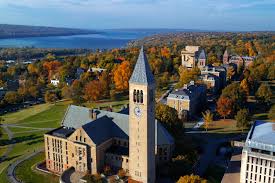
Ithaca, New York was just a great town for music, bands and musicians – far more sophisticated and active than anyone would expect for an upstate city of some 30,000 residents. The compelling reason (certainly in part) was demand. Cornell was an Ivy League institution, of course, and intellectual pursuits were always paramount, but it was also an intense party school, wildly so. In 1962, there were no less than fifty-two fraternities on the Hill and virtually all took great pride in their parties.

This, by the way, was many years before disk jockeys spinning records became commonplace. Here, parties meant live bands, exclusively: every home football weekend, Fall Weekend, IFC (inter-fraternity council) Weekend, Spring Weekend and any other time an excuse for a party seemed appropriate, which was often. (On those major weekends there was typically a “smooth” band Friday night, a rock band Saturday night, with the oft-used option of a band or a touring act on Saturday afternoon, the likes of The Coasters, Bo Diddley, Link Wray, and a group for the Sunday morning soiree, all highlighting the plethora of music jobs available.) And this does not account for the many bars in Ithaca, Cortland and Elmira that featured live music, to say nothing as well of the social scene at Ithaca College on the south hill opposite Cornell, nearby Cortland College (later SUNY Cortland) but thirty minutes distant, and Syracuse University, just an hour away.
The extensive availability of work created a particular music culture and spawned an inordinate number of masterful local rock bands including, among many others, Bobby Comstock and the Counts (who charted with “Tennessee Waltz” and “Let’s Stomp” and impressed with “I Wanna Do It”); Ronnie Dio and the Prophets (later “Dio”, a heavy metal star after being lead singer of Black Sabbath), Bernie Milton and the Cavaliers (“The Waddle”), The Thrashers and from Geneva, Wilmer and the Dukes, said to be the inspiration for Otis Day and The Knights of Animal House fame. A listing of prominent local bands of the time in the Ithaca High School class of 1961 website reminds of these groups in addition: Rick Jackson and The Lancers, The Ricketts, Sybil Love and The Lovenotes, Terry and The Renegades, The Sawyer Boys and Jenny (Helen) Jordan.
Another critical aspect of music in Tompkins County and environs was that the bands listened to – and played – a generous amount of black songs that typical suburban or rural students somehow were not exposed to. This was a special dimension which further elevated the allure of the music and contributed to creating a sui generis Ithaca sound. It was into this enlightening and fertile musical atmosphere that Bruce Bergman journeyed the moment he arrived as a freshman at Cornell in September 1962.
Communication then consisted mostly of index cards on the bulletin board of the student union, Willard Straight Hall, known as the “Straight”. One listed band audition was for a guitar player with the established group Dick and the Trojans, such blatant double entendres considered stylish at the time. At a fraternity house (likely Delta Upsilon) near the law school days before classes were to begin, band manager, Cap Hershey (one couldn’t make up a better name even if it was in a movie), presided over the tryout with band lead singer, Brooklyn sophomore, Mark Wallace. (Sophomore Delta Kappa Epsilon member John Hubbard on drums rounded out the group.)
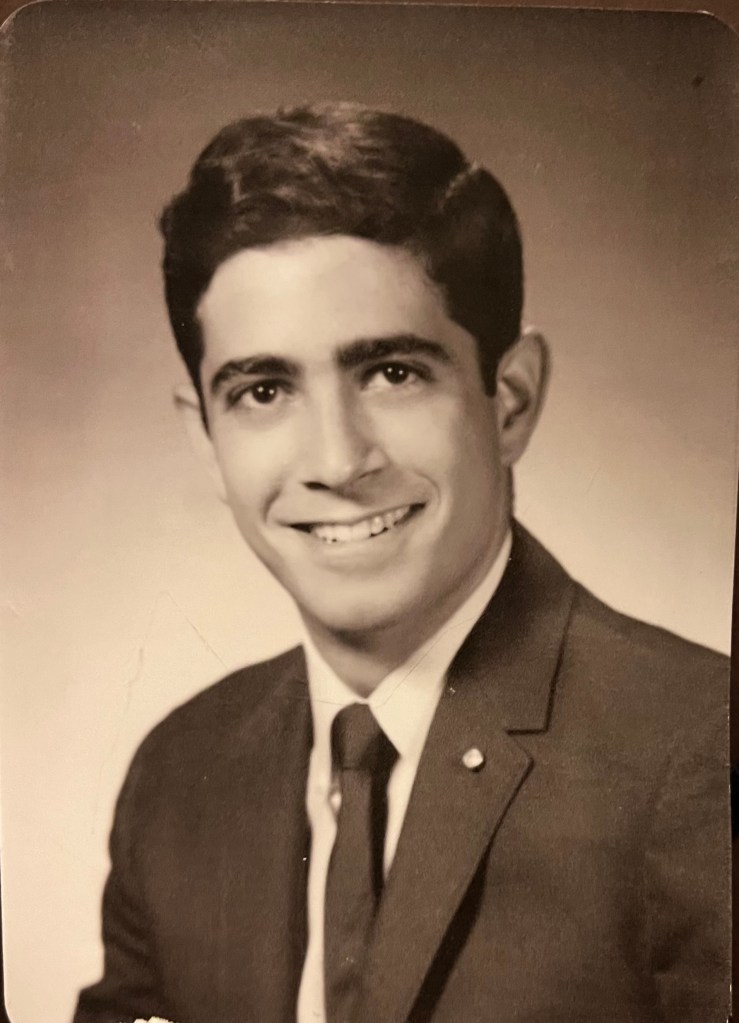
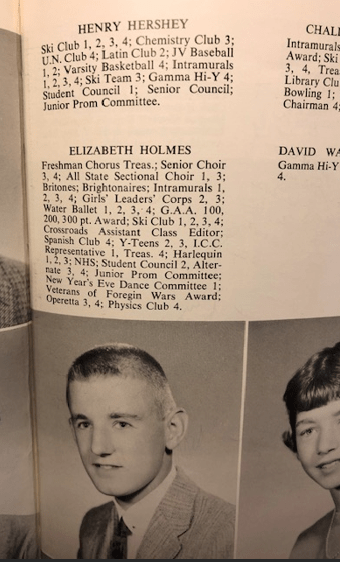

Left to right: Trojan’s lead singer, Mark Wallace circa 1962, later Bravado’s vocalist on first studio recordings, 1963; Both from the 1961 Brighton High School Yearbook, Rochester, NY: Trojan’s Manager, Henry “Cap” Hershey and Trojan’s, later Bravados drummer, John Hubbard.
“Play Bony Maronie”, Cap called out. The distinctive riff in E major for that was standard fare – the mentioned foundation derived from the high school playing years. Mark sang it and the sound clicked. “Try ‘Runaway’”, requiring a unique figure on an open A minor chord with a somewhat different chord pattern guitarists needed to know. Next, “What’d I Say” another song with a distinctive riff. Then, as requested, “Runaround Sue”, a common 1-6-4-5 chord structure. Bruce was immediately anointed guitarist with the Trojans.
Bookings already in place, but a few days later the band played a Saturday afternoon welcome-back party for the law school on the tennis courts below the buildings, followed that night by a blast of a party at the AEPi house at 310 Triphammer Road – two jobs in one day – a far cry from musical opportunities on Long Island. (As an aside, the seemingly modest pay for the two jobs, $15 and $25 respectively, totaling $40, astonishingly translates into a value in 2025 of some $424-a good way to finance a college education.)

AEPi House, Cornell, Front View, circa 1962

AEPi House, Cornell, Rear View, circa 1962 , entire lower floor the scene of so much party revelry with bands and groups The Bravados, Bobby Comstock, Ronnie Dio, Wilmer and the Dukes, Big Momma Thornton, Bo Diddley, The Coasters and numerous others too extensive to recite.
This was followed with other fraternity gigs, a number at DKE, and the Freshman Class Party in the Memorial Room at the Straight on November 10, 1962.

Promotion for the Freshman Class Party at Cornell, 1962

Memorial Room at Willard Straight Hall, Cornell where the Trojans played in the Fall of 1962
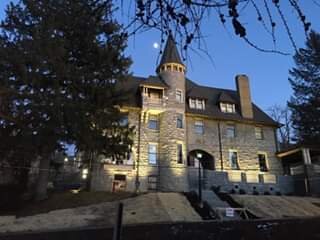
DKE Fraternity, Cornell where the Trojans and later as The Bravados, frequently performed
After the first semester, Mark left school, Bruce on guitar, assumed leadership of the group and, per introduction from a Phi Sig named Barkin, Wallace was replaced by John Booth, an African-American sophomore Cornellian from Sugar Hill in Harlem. Ithaca native and Cornell freshman John Worthen joined as the bass player. John Hubbard continued on drums. Now the group had a different and uniquely appealing party sound. By then Bruce was arranging the band’s bookings and changed the name to The Bravados, an identification they would use for the remainder of the four years at Cornell.
They continued playing at fraternity parties, Phi Sigma Delta among them, some bars in Elmira, and memorably, the Freshman Class Picnic on the Chi Psi lawn on May 18, 1963.

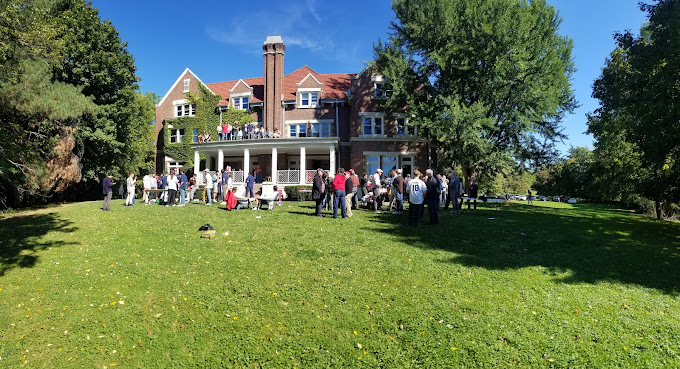
Top: Promotion for the Freshman Class Picnic at Cornell, 1963. Bottom: Chi Psi Fraternity, Cornell University where The Bravados played on the veranda overlooking the lawn.
 THE BRAVADOS, A 60s collegiate rock band