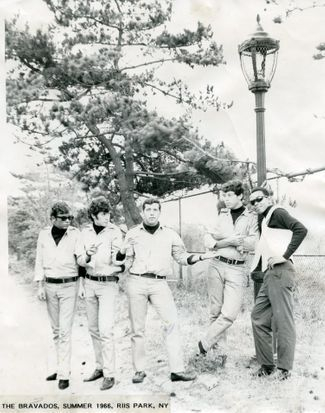
Bravados Summer 1966, Riis Park, NY. From left to right: Larry Laufer, Gene Coggshall, Jeff Newman. Bruce Bergman and Mongo Booth
While garage bands of the 1960’s may merely be a cultural artifact of times long gone, thousands will warmly recall with fondness and excitement the sound of The Bravados, a five-man aggregation with roots in Long Island’s Five Towns dating back to around 1960. Those who will remember and to whom this will have the most meaning are the Adelphi University crowd who danced to The Bravados at Garden City’s Blossom Lounge, circa ’63-’64; the thousands who went wild at Lou’s in Atlantic Beach in the Summer of ’64; uncountable fraternity party revelers at Cornell from ’62 through ’66; all the St. John’s students who gathered at the Straw Hat in Mineola in the Summer of ’66; attendees at the Freshman inaugurals in New York City in ’66 and ’67 for Columbia, NYU and Fordham; various partygoers at Syracuse University and Ithaca College in the mid-sixties; those who visited The Hollywood in Cortland, The Travelers, The Boxcar and the Alt Heidelberg in Ithaca, The Cork N’ Bib in Westbury, El Patio in Atlantic Beach, Leone’s in Long Beach, the Silver Night, later the Shindig Lounge and then Bounty Inn in Hewlett, among more than a few others.
Who these guys were and the story of why so many will still remember a band without a hit record is the tale that follows, an excursion traversing some thirty-five years of the Bravados playing joyous rock music at countless venues.
Rock music of those days, at least outside of recording studios and the pros found there, was often rather primitive, three-and-four chord songs populating the airways, so it was not especially challenging to play rock for parties at perhaps an adequate level. Still, high school rock bands were relatively uncommon on Long Island and in the Five Towns area of Long Island’s South Shore.
The Bravados early 1962. From left to right: Bruce Bergman, Richie Goldman, Gary Gross, and Dave Brown
As of 1959, the only band at Lawrence High School was the Teen Tones (a typically prosaic name for the time); one of the founders was lead guitar player, Gary Gross, from Lawrence. Opportunities for such bands in these earlier days of rock were limited (likely a reason why more did not pursue the avocation) but the Teen Tones found occasional work, as did nearby Hewlett High School’s equivalent band, The Valiants.
By 1960 at Lawrence, lead guitar player Jeff Reckseit (Cedarhurst) formed and booked his own group The Zodiaks and when guitar player Bruce Bergman (North Woodmere) was replaced in that band by Webb Eliscu, Bruce decided to form his own group. Intrigued by the alliteration with his name, he chose “The Bravados” as the new band’s moniker. As a direct rival to the Teen Tones, the first iteration of The Bravados featured Larry Laufer (North Woodmere) on piano (years later to find some notoriety as a vocalist and keyboard player with Crazy Elephant – “Gimme Gimme Good Lovin’”), on electric bass – not so common then – Inwood’s Dave Brown (and his big round mound of uncouth sound) and a drummer whose name escapes memory.
Although there was nothing particularly noteworthy about this, other than the intrepid spirit of musicians doing what so few others attempted, it did afford the players some fundamentals which would be critical to later efforts. Many of the hits had distinct lines – riffs – figures – that guitar players needed to know, along with the chord structures of the tunes. Not every record was purely elemental. Guitarists who knew the figures and the chords could play in other bands – it was simply an essential foundation.
By late 1961, the Teen Tones disbanded and so Gary Gross (on guitar) replaced Larry Laufer (on piano) in The Bravados, although Larry was to return some years later. Richie Goldman (Cedarhurst), who had been the Teen Tones drummer, also came on board. With Gary and Bruce together, the real nucleus of The Bravados was formed.
From left to right: Gary Gross, Dave Brown (rear), Richie Goldman, and Bruce Bergman
That graduation summer of 1962 saw The Bravados’ first major gig, a July dance on the outdoor dance pavilion at The Atlantic Beach Hotel. “ABH” as it was widely known, was a venerable seaside grande dame (opened in 1930) hotel which weekly featured genuine star entertainment in its night club, among them, Count Basie, Cab Calloway and The Ink Spots. An entrepreneurial cabana manager at ABH sponsored the dance and distributed posters, much like the fictional Blues Brothers did for the big concert Maury Sline booked for them. There was a substantial crowd that night and The Bravados had their first taste of the ineffable joy of playing a real professional music job. Musician and friend Lenny Laks, later a founder of the wonderful Hamilton Face Band, noted at the time with approval that The Bravados played the then just released “Twist and Shout” by The Isley Brothers.
Original Poster: The Bravados at A.B.H. July 1962
The ABH gig was shortly followed with a dance on the upper deck at the Mayfair Beach Club in Atlantic Beach, since 1981 the Sunny Atlantic.
They were also booked at a Woodmere bar on Franklin Place, the long forgotten Sid’s Ten Rounder, and ironically witnessed a genuine fight on the dance floor – good training for what did happen from time to time at such venues.
Ithaca, New York was just a great town for music, bands and musicians – far more sophisticated and active than anyone would expect for an upstate city of some 30,000 residents. The compelling reason (certainly in part) was demand. Cornell was an Ivy League institution, of course, and intellectual pursuits were always paramount, but it was also an intense party school, wildly so. In 1962, there were no less than fifty-two fraternities on the Hill and virtually all took great pride in their parties.
This, by the way, was many years before disk jockeys spinning records became commonplace. Here, parties meant live bands, exclusively: every home football weekend, Fall Weekend, IFC (inter-fraternity council) Weekend, Spring Weekend and any other time an excuse for a party seemed appropriate, which was often. (On those major weekends there was typically a “smooth” band Friday night, a rock band Saturday night, with the oft-used option of a band or a touring act on Saturday afternoon, the likes of The Coasters, Bo Diddley, Link Wray, and a group for the Sunday morning soiree, all highlighting the plethora of music jobs available.) And this does not account for the many bars in Ithaca, Cortland and Elmira that featured live music, to say nothing as well of the social scene at Ithaca College on the south hill opposite Cornell, nearby Cortland College (later SUNY Cortland) but thirty minutes distant, and Syracuse University, just an hour away.
The extensive availability of work created a particular music culture and spawned an inordinate number of masterful local rock bands including, among many others, Bobby Comstock and the Counts (who charted with “Tennessee Waltz” and “Let’s Stomp” and impressed with “I Wanna Do It”); Ronnie Dio and the Prophets (later “Dio”, a heavy metal star after being lead singer of Black Sabbath), Bernie Milton and the Cavaliers (“The Waddle”), The Thrashers and from Geneva, Wilmer and the Dukes, said to be the inspiration for Otis Day and The Knights of Animal House fame. A listing of prominent local bands of the time in the Ithaca High School class of 1961 website reminds of these groups in addition: Rick Jackson and The Lancers, The Ricketts, Sybil Love and The Lovenotes, Terry and The Renegades, The Sawyer Boys and Jenny (Helen) Jordan.
Another critical aspect of music in Tompkins County and environs was that the bands listened to – and played – a generous amount of black songs that typical suburban or rural students somehow were not exposed to. This was a special dimension which further elevated the allure of the music and contributed to creating a sui generis Ithaca sound. It was into this enlightening and fertile musical atmosphere that Bruce Bergman journeyed the moment he arrived as a freshman at Cornell in September 1962.
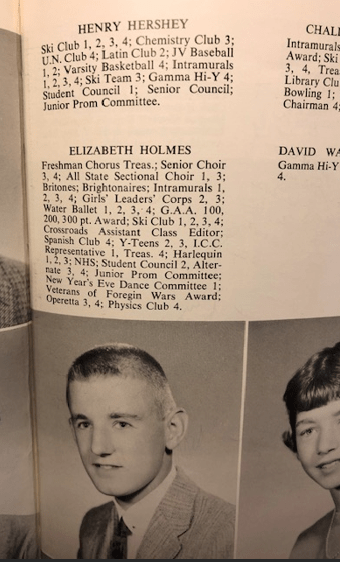
Communication then consisted mostly of index cards on the bulletin board of the student union, Willard Straight Hall, known as the “Straight”. One listed band audition was for a guitar player with the established group Dick and the Trojans, such blatant double entendres considered stylish at the time. At a fraternity house (likely Delta Upsilon) near the law school days before classes were to begin, band manager, Cap Hershey (one couldn’t make up a better name even if it was in a movie), presided over the tryout with band lead singer, Brooklyn sophomore, Mark Wallace. (Sophomore Delta Kappa Epsilon member John Hubbard on drums rounded out the group.)
Left to right: Trojan’s lead singer, Mark Wallace circa 1962, later Bravado’s vocalist on first studio recordings, 1963; Both from the 1961 Brighton High School Yearbook, Rochester, NY: Trojan’s Manager, Henry “Cap” Hershey and Trojan’s, later Bravados drummer, John Hubbard.
“Play Bony Maronie”, Cap called out. The distinctive riff in E major for that was standard fare – the mentioned foundation derived from the high school playing years. Mark sang it and the sound clicked. “Try ‘Runaway’”, requiring a unique figure on an open A minor chord with a somewhat different chord pattern guitarists needed to know. Next, “What’d I Say” another song with a distinctive riff. Then, as requested, “Runaround Sue”, a common 1-6-4-5 chord structure. Bruce was immediately anointed guitarist with the Trojans.
Bookings already in place, but a few days later the band played a Saturday afternoon welcome-back party for the law school on the tennis courts below the buildings, followed that night by a blast of a party at the AEPi house at 310 Triphammer Road – two jobs in one day – a far cry from musical opportunities on Long Island. (As an aside, the seemingly modest pay for the two jobs, $15 and $25 respectively, totaling $40, astonishingly translates into a value in 2025 of some $424-a good way to finance a college education.)
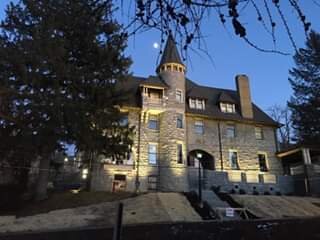
AEPi House, Cornell, Front View, circa 1962
AEPi House, Cornell, Rear View, circa 1962, entire lower floor the scene of so much party revelry with bands and groups The Bravados, Bobby Comstock, Ronnie Dio, Wilmer and the Dukes, Big Momma Thornton, Bo Diddley, The Coasters and numerous others too extensive to recite.
This was followed with other fraternity gigs, a number at DKE, and the Freshman Class Party in the Memorial Room at the Straight on November 10, 1962.
Promotion for the Freshman Class Party at Cornell, 1962
Memorial Room at Willard Straight Hall, Cornell where the Trojans played in the Fall of 1962
DKE Fraternity, Cornell where the Trojans and later as The Bravados, frequently performed
After the first semester, Mark left school, Bruce on guitar, assumed leadership of the group and, per introduction from a Phi Sig named Barkin, Wallace was replaced by John Booth, an African-American sophomore Cornellian from Sugar Hill in Harlem. Ithaca native and Cornell freshman John Worthen joined as the bass player. John Hubbard continued on drums. Now the group had a different and uniquely appealing party sound. By then Bruce was arranging the band’s bookings and changed the name to The Bravados, an identification they would use for the remainder of the four years at Cornell.
They continued playing at fraternity parties, Phi Sigma Delta among them, some bars in Elmira, and memorably, the Freshman Class Picnic on the Chi Psi lawn on May 18, 1963.
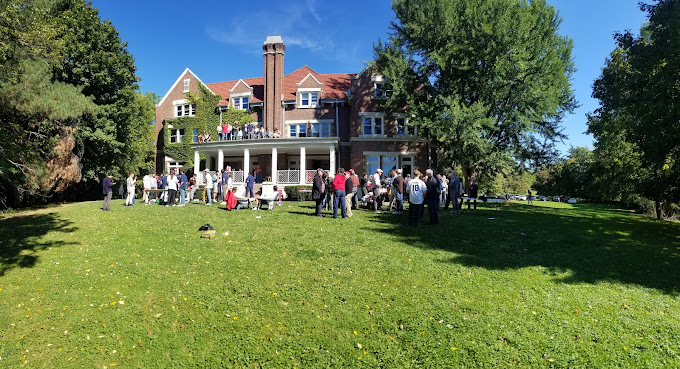
Top: Promotion for the Freshman Class Picnic at Cornell, 1963. Bottom: Chi Psi Fraternity, Cornell University where The Bravados played on the veranda overlooking the lawn.
Early in the Summer of 1963, Gary, Jeff and Bruce returned from their respective colleges and united (Jeff now on bass) as The Bravados, joined by an underage drummer from Irvington, New Jersey, Aaron Prestup. John Booth – by now renamed by Bruce as “Mongo Booth” for performing purposes – came with Bruce from the Cornell iteration to complete the band. As one of the first black singers in a white group on Long Island, Mongo’s presence and dynamic singing, along with the group’s fraternity party sound, set them apart from other first-class aggregations.
They auditioned later that summer for former Brooklyn Dodger, Cal Abrams, who owned The Blossom Lounge on Nassau Boulevard in Garden City, then the main watering-hole for students from nearby Adelphi University. (Cal was a Dodger from 1949-1952 in the legendary times of Jackie Robinson, Peewee Reese, Duke Snider, Gil Hodges and the other boys of summer). Cal was especially taken with the band’s unique party spirit and his evaluation led to weekend bookings for the balance of the summer. The boys often befuddled new arrivals by squeezing the three guitarists into the phone booth with the door closed and chords connected to the amplifiers. The dance floor was so crowded that for the group to be seen in their matching white V-neck sweaters with red trim, Bruce, Gary and Jeff (the two guitars and bass) would stand on chairs, with three more chairs for their mike stands. And always mindful of squeezing in even more patrons, they would then turn around on the chairs to face the plate glass window looking out to the sidewalk so passers by would stop and come on in to join the madness.
The Bravados were a hit at The Blossom and, along with unrecalled bands at the clubs Zoli’s and Ryan’s on Hempstead Turnpike near Hofstra University, were surely the nascent stages of rock groups in clubs on Long Island, at least in Nassau County. (Some songs of the day they played included Marvin Gaye’s “Can I Get A Witness”, Tommy Roe’s “Everybody” and Rufus Thomas’ “Walking The Dog”, oldies were such tunes as Jackie and the Starlites’ “Valerie”, Chuck Jackson’s “I Don’t Want To Cry”, The Drifters’ “Save The Last Dance For Me”, The Jesters’ “The Wind” and Jerry Butler’s “For Your Precious Love”.)
What perhaps made The Blossom even more special was the diverse influx of Bravado friends and devotees from Cornell and other colleges. The Bravados were to return to The Blossom for Christmas break in 1963 and various other occasions for some years thereafter until Cal Abrams sold the club and the theme changed. (It has remained a bar and restaurant ever since with different names at that location, 273 Nassau Boulevard, until 2013 JP McGeevers when it became Doc O’Grady’s.)
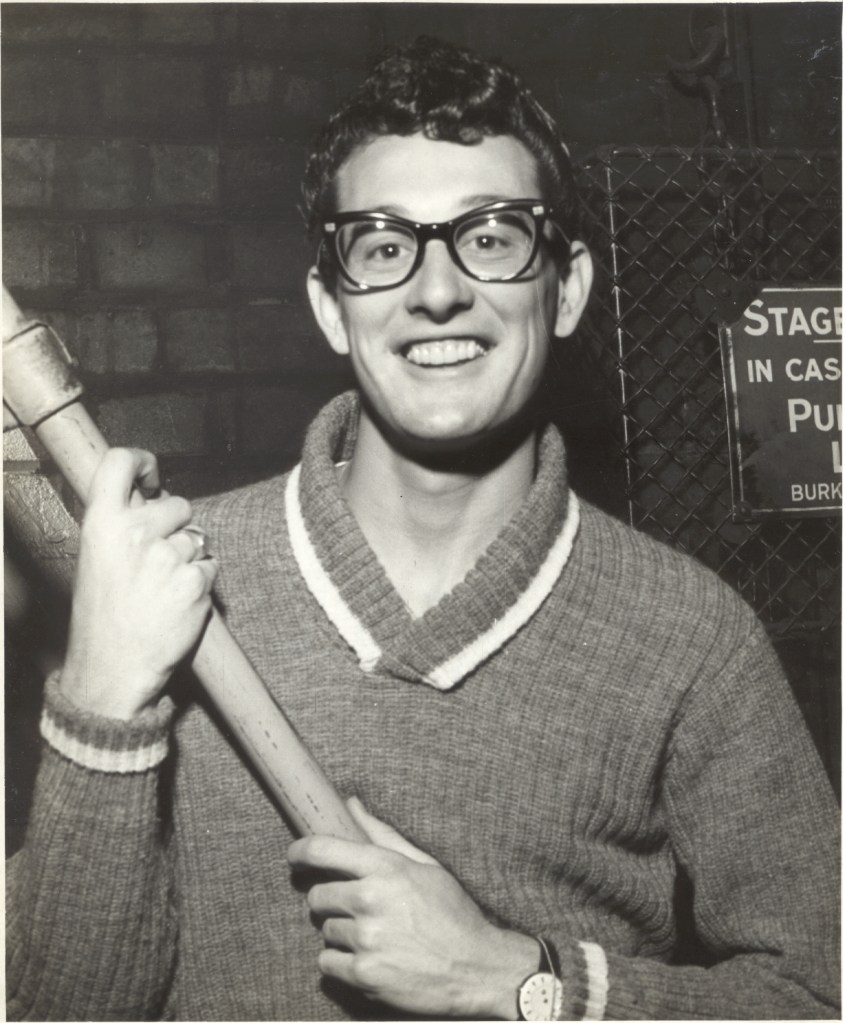
Shortly after Buddy Holly’s death in 1959, Bruce became acquainted with the then 25-year old Jo Harper, who managed Nor Va Jak Music and Dundee Music, the New York publishing company offices at 60 West 57th Street near Carnegie Hall of Holly’s manager, Norman Petty. While previously at Coral Records where she was secretary to the president Murray Deutsch, depicted in the movie “The Buddy Holly Story”, Jo had introduced Holly to Maria Elena Santiago who became Buddy’s wife. Later, Jo had also become Holly’s de facto secretary. Bruce was a great Buddy Holly fan and enjoyed all the lore known to Jo, who in turn took an interest in his youthful music career. (The full Jo Harper story was published in the September 2009 issue of England’s Now Dig This magazine in an article by Bruce entitled “Searching for Buddy Holly and Finding His Secretary”.)
Photo Credit: Estate of Georgiana Hagen, 1957 Outside of the Howard Theater, Washington, D.C. Left to right: Jo Harper, Joe B. Mauldin, Buddy Holly, Vi Petty, Jerry Allison, Georgiana Hagen, and Niki Sullivan
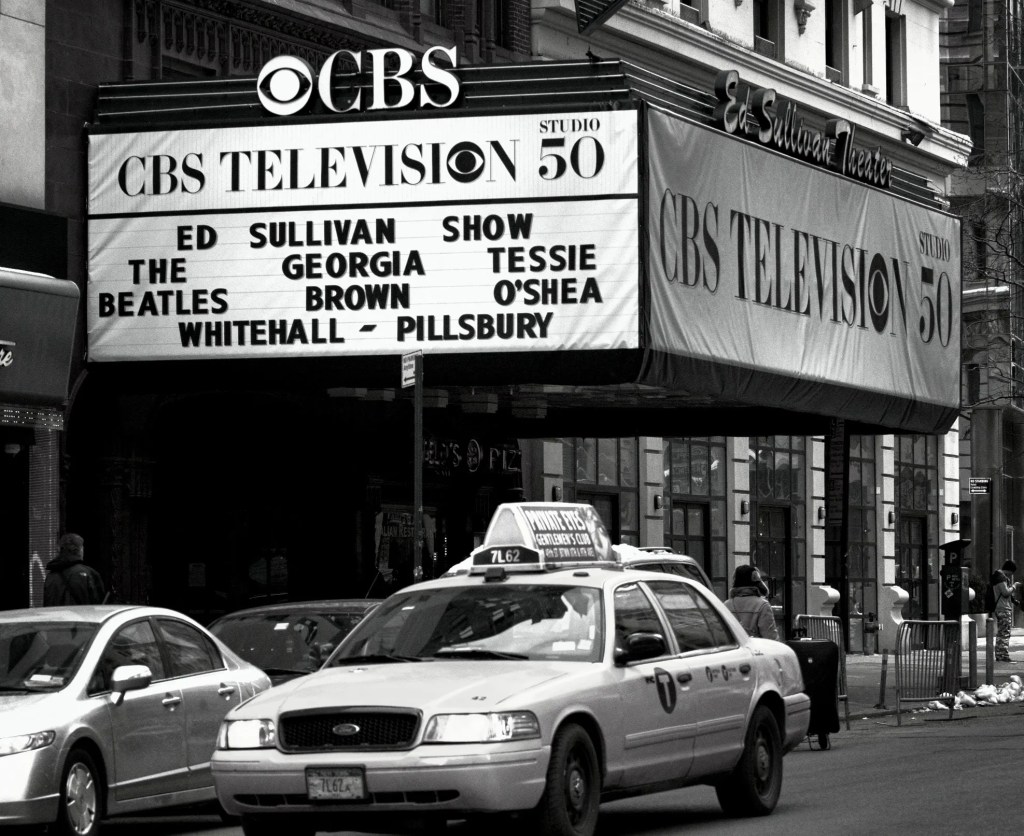
In 1963, it was Jo who introduced The Bravados to The Echoes, who had a big hit with “Baby Blue” and some further success with Ersel Hickey’s “Bluebirds Over the Mountain”. They, in turn, had launched into record producing in addition to continuing with their own releases. As to these, they engaged Bruce to be the bass player on their songs recorded at 1697 Broadway in a studio above the Ed Sullivan Theater where The Beatles famously debuted on television a year later: “Hey Good Lookin’ “, “Give Me Your Love”, “The More You Hurt Me”, on East Coast Records, and “Girl In The Window”. As to producing The Bravados, under their direction at a studio in Brooklyn (and with some of their overdubbing) the boys recorded a cover of The Lafayette’s “Life Too Short” (Mark Wallace on vocals) and “The Waddle”, revised as “The Monkey Waddle”, given the then current popularity of the dance The Monkey. That version of the band was composed of Bruce and Gary on guitars, Jeff Reckseit back on bass, Aaron Prestup on drums and as noted, Mark Wallace on vocals. They were told that Nat Cole’s KC Records would release the recordings although inexplicably it never came to pass.
Ed Sullivan Theater, New York, NY
In 1965 with Mongo Booth on vocals and Jeff Newman on drums, joining Bruce and Gary on guitar, Jeff Reckseit on bass, they went to the Empire Broadcasting Studios in Manhattan to record a new version of “The Waddle” and “I Wanna Do It” (both by then Cornell party anthems) an original song written by Bruce – “The Memory of Your Lovin’”- at 613 East State Street in Ithaca (not far from 343 State Street where a few years before Cornellian Peter Yarrow wrote “Puff the Magic Dragon“), and a Mary Wells’ tune, “Bye Bye Baby”. (Given studio costs, most of these were done in one take.) These recordings in hand, the guys knocked on doors at 1619 Broadway, the famous Brill Building in Manhattan’s Time Square, but, despite some nibbles, nothing eventuated.
The 1966 Bravados, yet more polished and with Larry Laufer substituted on the then au courant Farfisa organ, as well as Gene Coggshall now on bass with Jeff Newman continuing on drums, Bruce Bergman remaining on guitar, went that August to the National Recording Studios at 730 Fifth Avenue in New York to record an updated version of “The Memory of Your Lovin’” and two originals penned by Larry Laufer and Bruce Bergman, “I Said-A-Hey” and “Tears Must Fall”.
LIVE AT CORNELL
How elusive to return to one’s youth, to college days, to recapture the precise sound and feel of dancing for hours on end – at a joyous, frenetic fraternity party. But that is accomplished here through the revelation of a tape essentially hidden for some fifty-one years. The Bravados for all the live selections are Mongo Booth, vocals, Bruce Bergman, guitar (and occasional backup vocals), John DeWitt, bass, and Joe Mooney, drums.
The clubs in Ithaca in the sixties were terrific places to imbibe, dance and listen to top bands. These were havens for Cornell and Ithaca college students – townies too. But playing there was an adjunct to the extensive fraternity party scene in which The Bravado’s participated with such relish during their four-year college tenure.
In the course of the ’64 – ’65 school year they played at least twice at Lambda Chi Alpha, tape recordings made of each performance. Insufficient attention, though, was given to placement of the microphone, so for one gig, it was near the bass, guitar and vocals then relegated more to the background. For the other appearance the mic position was reversed, de-emphasizing the bass.
Nonetheless, this exciting example of the Ithaca sound is preserved. What precisely that is remains elusive to define, but it was exemplified by a sharp drive with crisp treble on guitar, abetted by wide use of Fender guitars and amps, solid bass and some drum emphasis on the floor tom. Musically, Ithaca was both insular and worldly at the same time – isolated as an enclave in a rural county, incestuous, as an abundance of musicians serially played in various bands from time to time, spreading their skills and sensitivities, cultivated by interacting with the many well known outside groups that flooded Cornell on the frequent major weekends. This was melded with being astute enough to adopt styles and sounds heard on black radio stations.
When this release was being contemplated in 2016, the breadth of Bravados’ studio material was limited and so inquiry was made as to the availability of anything else. Fortunately, the tape of the two jobs had been given to bass player John DeWitt. Years ago, he put it on a cassette and gave it to guitarist Bruce Bergman – so he knew it existed – but the fidelity of that version was unusable.
Felicitously, the original tape survived fifty-one years in decent shape, allowing DeWitt to download it directly through a computer to a disk, which was then shipped to England so engineering wizards John Beecher and Chris Hopkins of Rollercoaster Records could conjure up their sonic legerdemain. The welcome result is that selections from those once lost animated performances have been revived to remind what those precious moments sounded like – the energy and the joy of a Cornell fraternity party circa ’64 -’65 reclaimed: The Bravados live at Lambda Chi Alpha.
Full versions of all the studio recordings in superior quality, together with live performances from a sweet sixteen in March 1963, from the Blossom Lounge in the summer of 1963 and from a Cornell fraternity party circa ’64-’65 will be available on the Bravados’ forthcoming retrospective CD, “I Want To Do It” on Rollercoaster Records RCCD 6035.
Despite the auspicious beginnings of ’62-’63, both at Cornell and later at the Blossom in the summer of ’63, the band didn’t initially hit its stride that college year of ’63-’64. Mongo Booth busted out of Cornell (for the first time) so the group needed to scuffle for a lead singer. An apparent solution appeared in the form of a (name forgotten) big man on campus who inveigled his way into the band as the vocalist. He had enough influence to garner jobs-certainly meaningful and a main reason for his hiring-but was not a strong or professional vocalist. This weakness was exacerbated by the need to hire pickup bass players because only Bruce Bergman and drummer John Hubbard remained from the Bravados of the second semester of ’62-’63. When after a few months the new singer’s shortcomings dissipated the special qualities the group might otherwise have possessed-they just weren’t distinctive- the status quo became untenable and a change was required.
Townie Jerry Spriggs was a noted local African American vocalist who was both an outstanding singer and a compelling performer, well experienced with a number of Ithaca bands. Why he was available was pure happenstance, but that was just good fortune for the Bravados. Spriggs came aboard with spirit. They were now better and much more exciting so that college year concluded on a high note after all, presaging the accomplishments that were shortly to follow.










 THE BRAVADOS, A 60s collegiate rock band